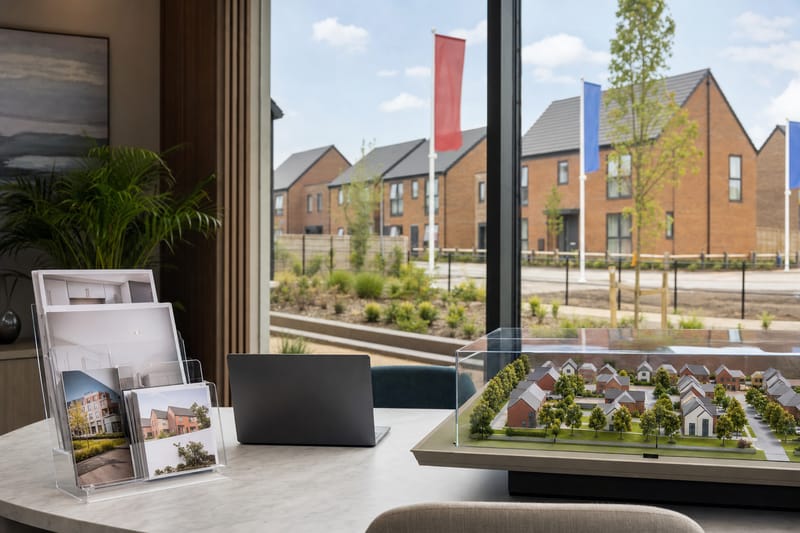
Walk onto almost any UK new build sales plot in 2026 and you'll see a version of the same sign: "Stamp duty paid", "£10,000 towards your deposit", "carpets and flooring included". New build incentives haven't disappeared — if anything, they've multiplied. But what they represent has changed. As build cost inflation has eased from the sharp spikes of 2022–2023 and sales volumes remain patchy across much of the country, housebuilders are under real pressure to keep reservations flowing without formally cutting their headline prices.
That distinction matters more than most buyers realise. A published list price feeds into a developer's land valuations, its comparables for neighbouring plots, and its reporting to shareholders or lenders. Cutting it is a visible, awkward admission. Layering an incentive on top of an unchanged price is not. So instead of discounting, builders increasingly offer to cover your stamp duty, contribute to your deposit, throw in flooring and white goods, or take your old house off your hands through part-exchange.
Some of these offers are genuinely valuable and can be worth thousands of pounds off your real cost of moving. Others are dressed-up versions of things you'd have negotiated anyway, or costs the builder was always going to absorb. This article works through the main incentive types you'll see on UK developments in 2026, what each is typically worth, which ones are genuinely negotiable rather than fixed "marketing dressing", and how to work out whether you're getting a real discount or just a re-labelled list price.
Before you get into the detail of any single incentive, it helps to understand why builders are behaving this way at all right now, because that context tells you how much room there genuinely is to negotiate.
Why Developers Use Incentives Instead of Price Cuts
Listed housebuilders report average selling prices and forward sales rates to the stock market twice a year. A sequence of headline price cuts across a region looks like weakness and can affect how analysts value the whole business. Incentives, by contrast, are typically recorded as a cost of sale or a marketing spend rather than a reduction in the average selling price, so the same commercial outcome — making the home more affordable to move you in this quarter — is achieved without the same reporting consequence.
There's also a practical land-value reason. Housebuilders often buy land based on projected sale values across a whole site, sometimes agreed years earlier with a landowner on an overage or deferred-payment basis. Formally reducing list prices on unsold plots can trigger renegotiation clauses or reduce the value of land still to be built out. Incentives sidestep this because the plot's recorded sale price stays intact.
The pressure points in 2026
- Build cost inflation has eased but not reversed. Materials and labour costs rose sharply in 2022–2023; growth has slowed but costs haven't fallen back to pre-pandemic levels, so builders have less room to simply drop prices.
- Mortgage rates remain higher than the 2021 lows, which continues to squeeze what first-time buyers can borrow, even where the Bank of England base rate has eased from its peak.
- Sales rates vary sharply by region and site. Some developments are selling close to target; others are sitting with completed, unsold "stock plots" that carry real holding costs for the builder every month they remain empty.
- Reservation targets are set centrally, and site-level sales teams are often given discretion over incentives — but not over the published price — to hit them.
This is the key insight for anyone shopping new build in 2026: incentives are frequently a proxy for how badly a specific plot needs to sell, not a fixed, non-negotiable extra. A show home plot near completion of a phase often carries far more room for manoeuvre than a popular corner plot released on day one of a new phase.
The size of the incentive on offer tells you more about how urgently that specific plot needs to sell than any generic "developer generosity" — treat it as a signal, not a gift.
With that context established, the rest of this guide works through each incentive type in turn, starting with one of the most substantial: part-exchange.
Part-Exchange: What It's Really Worth
Part-exchange lets you sell your current home directly to the housebuilder (or a panel of Repayment agents acting on their behalf) rather than putting it on the open market. In exchange, you avoid estate agent fees, chains, and the risk of your onward purchase falling through because a buyer further down the chain pulls out.
The catch is the price. Builders typically value your existing home at somewhere between 95% and 100% of an independent market valuation — and in a slower market, some offers sit lower still, particularly if the builder needs to factor in its own resale risk and holding costs. You are trading a discount on your sale price for speed, certainty, and zero fees.
When part-exchange genuinely stacks up
- Your current home is a type that's easy to resell quickly (typical family semi or terrace in a liquid local market), so the discount the builder applies is smaller.
- You need to move on a fixed date — a school term, a job relocation, an ageing relative's care needs — and can't afford the risk of a chain collapsing.
- You're not a cash buyer and would otherwise be reliant on a linked sale to complete on the new build within the timescale the builder needs.
When it's likely to cost you more than it saves
- Your current home is in high demand locally and would likely sell at or above asking price within weeks on the open market.
- You have flexibility on timing and can afford to run a normal sale in parallel with reserving the new build.
- The part-exchange valuation offered is noticeably below two or three independent estate agent valuations — a common tactic is to value conservatively and rely on the convenience factor to close the gap in the buyer's mind.
Part-exchange terms are also genuinely negotiable in a slow market: some builders will move closer to full market value, extend the offer validity period, or combine it with a smaller cash incentive if a plot has been sitting unsold. It's worth asking directly whether there's flexibility rather than accepting the first figure quoted.
Stamp Duty Contributions Explained
"We'll pay your stamp duty" is one of the most common headline offers on 2026 new build marketing boards, and it can be one of the more straightforwardly useful incentives — provided you understand that the builder isn't sending a cheque to HMRC on your behalf. Stamp Duty Land Tax (SDLT) is a legal liability that sits with you as the buyer, and your solicitor must still calculate and submit it correctly. What actually happens is that the developer contributes a sum equivalent to your estimated SDLT bill towards your overall costs, usually paid to your solicitor at completion, or the amount is simply built into your net completion figure.
How much is this actually worth?
The answer depends entirely on your own SDLT position, which varies by:
- Whether you qualify for first-time buyer relief (available on properties up to a set price threshold — check the current thresholds, as they are periodically reviewed by the Treasury).
- Whether you already own another property, which can trigger the additional-property surcharge.
- The purchase price band the property falls into, since SDLT is charged on a tiered basis.
- Whether you're a non-UK resident, which can add a further surcharge.
| Buyer scenario (illustrative, check current rates) | Approx. SDLT before relief | Typical developer contribution value |
|---|---|---|
| First-time buyer, £300,000 new build | Often nil or minimal under first-time buyer relief | Low — the "saving" may already exist without the incentive |
| Home mover, no relief, £400,000 new build | Several thousand pounds | Moderate to high — a genuine reduction in moving costs |
| Second home / buy-to-let purchase, £350,000 new build | Significant, due to the additional-property surcharge | High in cash terms, but still smaller than the surcharge itself |
Because the real value of this incentive varies so much buyer to buyer, always ask your solicitor to calculate your actual SDLT liability early in the process, then compare that figure against what's being offered. It's one of the easiest incentives to sound impressive on a hoarding while being worth very little to a particular buyer.
Deposit Contributions and Deposit-Boost Schemes
Deposit contribution incentives typically appear as a fixed cash sum — commonly somewhere in the £5,000–£25,000 range depending on the development, region and plot — that's applied towards your deposit or completion costs rather than paid to you directly before exchange. The mechanics matter here more than almost any other incentive, because how a deposit contribution is structured can affect your mortgage application.
Two very different structures
- Genuine gifted deposit reduction: the developer effectively reduces the amount you need to find from your own funds, and the contribution is disclosed to your lender as part of the transaction. Most mainstream lenders will accept this provided it's properly documented and doesn't exceed their maximum permitted incentive percentage (often capped around 5% of the purchase price, though this varies by lender).
- Price-and-incentive repackaging: the list price is set slightly above what the builder would otherwise accept, with the "deposit contribution" simply bringing the net cost back to roughly where it would have landed anyway. Here, the incentive is real in the sense that it reduces your cash outlay, but the underlying property valuation used by your lender may be affected, since valuers are required to net off incentives above certain thresholds when assessing a property's true market value.
What to check before counting on a deposit incentive
- Is the contribution disclosed on the memorandum of sale and mortgage offer, or is it an "informal" side arrangement? Anything not disclosed to your lender can constitute mortgage fraud, even unintentionally, and should be avoided entirely.
- Does your lender's maximum loan-to-value calculation use the price before or after the incentive? This changes how much deposit you genuinely need to find.
- Is the contribution paid at completion, or conditional on hitting a specific reservation deadline? Some are time-limited to clear a phase by a financial quarter-end.
Used correctly and disclosed properly, deposit contributions can be one of the most useful incentives for first-time buyers stretching to find a deposit. Used carelessly, they can complicate a mortgage application or mask a property's true value. If you're weighing this against government-backed deposit help, it's worth reading how the Lifetime ISA works for new build home deposits alongside any developer contribution, since the two can often be combined.
Carpets, Flooring, Turf and "Finishing Touches" Packages
These are the most visible incentives on a show home tour and often the easiest to overvalue. A typical package might include fitted carpets throughout, kitchen and bathroom flooring, a turfed rear garden, and sometimes curtain poles or light fittings. Sales teams will often quote a retail-equivalent value — "worth £6,000" — based on what you'd pay a high street retailer for the same specification.
The reality is that builders buy these materials at trade rates, often as part of a standing arrangement with a flooring or landscaping contractor supplying dozens of plots across a region. The genuine cost to the builder is typically a fraction of the quoted retail value — commonly estimated at 30–50% of it, though this varies by product and region. That doesn't make the incentive worthless: it still saves you the hassle and cash outlay of fitting flooring and turfing a garden yourself in the weeks after completion. But it means the headline "£6,000 of flooring" figure is a marketing number, not a true measure of what you're gaining relative to the builder's cost.
Questions worth asking
- Can you choose your own flooring supplier and take a cash-equivalent discount instead? Some developers will offer this if asked directly, though many restrict it to protect their supply arrangements.
- Is the carpet grade genuinely comparable to what you'd choose yourself, or a basic contract-grade product? Ask to see samples rather than relying on a show home, which is often finished to a higher specification than the standard package.
- Does the turf/landscaping incentive cover the whole garden or just a token strip near the patio, with the rest left as topsoil?
| Incentive item | Typical quoted "retail" value | Realistic value to you |
|---|---|---|
| Carpets throughout (3-bed home) | £3,000–£5,000 | Genuine saving, but check grade against what you'd otherwise buy |
| Kitchen/bathroom flooring upgrade | £1,500–£2,500 | Useful if it avoids a manual upgrade cost you'd have paid anyway |
| Turfed rear garden | £800–£2,000 | Saves early hassle; check coverage extends to full plot boundary |
| Light fittings/curtain poles | £500–£1,000 | Low-cost for the builder to include; modest genuine value |
These packages are worth having, but treat the quoted value as an opening position, not a fact, and weigh it against whether you'd have chosen different materials anyway.
Legal Fee Contributions and Other Soft Incentives
Alongside the headline items, most developments offer a scatter of smaller incentives that can add genuine value without appearing prominently on the marketing hoarding. Understanding which of these are real costs the builder is choosing to absorb — versus items that were negligible to them anyway — helps you judge how much goodwill a specific sales office actually has to give.
Common soft incentives in 2026
- Legal fee contributions: typically £500–£1,500 towards your solicitor's costs, sometimes tied to using a solicitor from the developer's recommended panel. This is a genuine saving, but check whether the panel solicitor's quote is actually competitive — some panel firms price slightly higher, absorbing part of the "saving" back into their own fee. See our guide on new build solicitor fees and how to budget for typical ranges to compare against.
- Mortgage broker fee cover or cashback: less common but appearing on some developments, particularly where the builder has an in-house or panel mortgage service.
- White goods packages: integrated appliances (oven, hob, washing machine, fridge-freezer) thrown in rather than offered as a paid upgrade. Genuinely useful, but check the brand and warranty length against what you'd buy independently.
- Warranty or service charge holidays: on developments with estate management charges, some builders offer to cover the first year or two of service charge, which softens the shock of ongoing costs but doesn't reduce them long-term.
- Rent-back or delayed completion arrangements: useful if your onward chain or notice period doesn't align neatly with the build completion date, though these are typically only offered where it suits the builder's own cash flow and phase completion targets too.
None of these individually transforms the economics of a purchase, but stacked together across a completion they can add up to several thousand pounds of genuine reduction in your total moving costs, which is worth pursuing even after the "big" incentive has been settled.
Incentives Compared: What's Typically Negotiable vs Fixed
Not every incentive carries the same room for negotiation. Understanding where a sales team has genuine discretion — versus where the offer is a fixed head-office policy applied uniformly across a development — helps you focus your negotiating energy where it will actually move the outcome.
| Incentive type | Typical value range | How negotiable is it? | Key check before accepting |
|---|---|---|---|
| Part-exchange | 95–100% of independent valuation (can be lower in slow markets) | Moderate — more room if plot is slow-selling | Compare against two or three independent agent valuations |
| Stamp duty contribution | £0–£15,000+ depending on liability | Low — usually a fixed policy, though the equivalent cash can sometimes be redirected | Calculate your actual SDLT liability first |
| Deposit contribution | £5,000–£25,000 | Moderate to high on unsold, near-complete plots | Confirm lender disclosure and valuation treatment |
| Flooring/carpets/turf | Quoted £3,000–£8,000 retail value | High — often swappable for cash-equivalent or upgrade | Ask for trade-cost equivalent or your own supplier option |
| Legal fees | £500–£1,500 | High — rarely formally advertised | Compare panel solicitor quote against independent quotes |
| White goods | £1,000–£3,000 | Moderate | Check brand, warranty and whether integrated units are full-size |
As a rule of thumb, cash-based incentives tied to head-office marketing campaigns (stamp duty, a fixed £X deposit boost advertised across a whole regional portfolio) tend to be the least flexible, because changing them for one buyer creates a precedent the sales team isn't authorised to set. Incentives that live within a single site's discretionary budget — flooring choices, legal fees, part-exchange valuations, completion timing — tend to have far more give, particularly towards the end of a builder's financial quarter or year when site managers are under pressure to convert reservations into legal completions.
If an incentive is on a national marketing board, assume it's the floor of what's on offer, not the ceiling — ask what else can be added on top before you commit.
How to Tell a Real Discount From a Repackaged List Price
The single most important skill in evaluating any new build incentive in 2026 is working out whether the list price itself has been quietly inflated to fund it. A £10,000 incentive is worthless if the plot's price has been set £10,000 above where it would otherwise have sat.
Practical checks you can run yourself
- Compare against Land Registry sold prices for similar plot types and sizes elsewhere on the same development, or on comparable developments by the same builder nearby. If earlier phases sold for noticeably less per square foot without incentives attached, that's a signal the current price may have room built in.
- Ask for the price history of the specific plot. Reputable sales offices can tell you whether a plot's price has changed since launch and when the current incentive was added. A price rise shortly before an incentive appears is a clear red flag.
- Check the Home Builders Federation star rating and recent buyer reviews for the developer, since builders under sustained sales pressure or reputational strain sometimes lean harder on incentive marketing to compensate for weaker organic demand. Our guide on using the HBF star rating to compare developers explains how to read this properly.
- Get an independent valuation or mortgage valuation survey before exchange where possible. Lenders' valuers are required to reflect incentives in their assessment, so a valuation that comes in meaningfully below the asking price is a strong signal that the incentive is doing more repackaging than genuine discounting.
- Look at price-per-square-foot across similar house types on the same development, not just the headline price. Developers sometimes vary the base specification subtly between plots (smaller garden, different aspect, closer to a road) which justifies genuine price differences unrelated to any incentive.
None of this means incentives are inherently dishonest — many are genuine and well worth having. But treating every offer with the same basic scrutiny you'd apply to any other major purchase discount protects you from the small minority of cases where the "saving" is largely on paper.
Negotiating New Build Price: Timing and Tactics That Work
Negotiating new build price is different from negotiating on a second-hand home, because you're not dealing with an individual seller's personal circumstances — you're dealing with a sales operation working to targets, budgets, and reporting periods. Understanding that structure helps you time and frame requests more effectively.
Timing
- Financial quarter and year-end: most listed housebuilders report results based on the calendar or a financial year running to June. Sales teams are often under the most pressure to convert reservations into legal completions in the final weeks of March, June, September and December — and site managers may have more discretion to sweeten a deal to get a completion over the line before the reporting cutoff.
- End of a development phase: the last few unsold plots on a phase, especially less popular house types or plots near a road or bin store, often carry the deepest incentives because the builder wants to release the next phase with a clean site rather than carry unsold stock forward.
- Show homes and long-standing stock plots: a completed home that's been standing empty for several months represents ongoing cost to the builder (council tax, insurance, security, void-period costs) with no rental income, which creates real pressure to move it.
Tactics
- Ask what incentives are available before naming your own budget or mentioning that you're a cash buyer or have no chain — disclosing your strong negotiating position too early can reduce the pressure on the seller to move.
- Get quotes and pricing on 2–3 comparable developments in the same area before your first serious conversation, so you have a genuine point of comparison rather than negotiating in the abstract.
- Ask for the incentive package in writing before you pay a reservation fee, and check it's reflected accurately in the reservation agreement and eventually the contract.
- Consider negotiating on specification upgrades (a better kitchen worktop, an upgraded ensuite) rather than cash, particularly on newer-release plots where cash discounts are policy-restricted but specification changes may not be.
- Don't assume the first offer is final. Sales negotiators are typically given a discretionary range and often start at the lower end of what they're able to offer.
The strongest negotiating position is patience: buyers who can walk away, wait for the next phase, or consider a rival development nearby consistently get better terms than those who feel they must have this specific plot.
How Incentives Vary by Region and Developer
Incentive generosity in 2026 isn't uniform across the country, and it isn't uniform across builders either. Broadly, the pattern tends to follow local sales velocity: where demand is strong relative to supply, incentives shrink to little more than the soft extras; where a region has seen a large volume of new build completions land at once, or where local affordability is stretched relative to average prices, incentives tend to be more generous and more negotiable.
Broad regional patterns worth checking locally
- High-demand commuter towns and cities with strong transport links often see thinner incentive packages, since plots sell without needing much additional inducement. Areas like this can still see incentives on specific slow-moving house types (larger 5-bed executive homes, for instance) even while smaller units sell at or near full price.
- Regions with a high concentration of large, multi-phase developments competing for the same buyer pool tend to see more aggressive incentive competition between builders on adjacent or nearby sites.
- Areas with significant new supply of apartments aimed at investors have sometimes seen deeper incentives where buy-to-let demand has softened, particularly where upcoming EPC requirements are prompting caution among landlord buyers — see our related piece on how upcoming EPC rules affect new build buy-to-let investors for context on that pressure.
Builder-level variance
Large, listed housebuilders tend to run structured, centrally-approved incentive campaigns with less site-level flexibility on the headline offer but reasonably consistent policies you can research in advance. Smaller regional or family-owned builders often have more site-level discretion but less predictable, less-advertised incentive structures — meaning you may need to ask directly rather than relying on what's printed on a hoarding.
Whichever builder or region you're looking at, checking recent sold prices and incentive patterns for that specific development — not just national headlines — will give you a far more accurate picture than any generic national commentary, including this article.
Risks and Red Flags to Watch For
Incentives are a normal, legitimate part of new build sales, but a handful of patterns are worth treating with caution, since they can end up costing you more than the incentive is worth.
Inflated valuations and future resale
If a list price has been raised to fund a generous incentive package, you may be paying more than the property's genuine open-market value on day one. This matters most if you need to sell or remortgage within the first few years, since a valuer or buyer working from comparable sold prices — rather than the original incentive-inflated price — may value the home lower than you paid. This is one reason new build homes have historically sometimes shown slower short-term price growth than the surrounding second-hand market in the same area.
Mortgage complications
Undisclosed or informally arranged incentives can create problems with your mortgage offer if a lender later discovers an arrangement wasn't declared. Always ensure every incentive, cashback, or contribution is disclosed in writing to your solicitor and broker, and confirmed as accounted for in your mortgage offer.
Reservation fee traps
Some incentive offers are time-limited and tied to paying a reservation fee quickly, which can pressure buyers into committing before they've had proper legal and financial advice. Reservation fees on new builds are typically non-refundable in certain circumstances, so read the reservation agreement carefully, including what happens to the fee and the incentive if your mortgage application is later declined or your circumstances change.
Specification substitutions
Occasionally, an advertised incentive (a particular appliance brand, a specific flooring grade) is quietly substituted for a lower-specification alternative between reservation and completion. Get the specification confirmed in writing as part of your contract pack, not just verbally at the sales office.
None of this should discourage you from taking a genuine, well-documented incentive. It's simply a reason to insist on everything being confirmed in writing and disclosed properly through the normal legal and mortgage process, rather than relying on verbal promises from a sales office.
Frequently Asked Questions
Are new build incentives instead of price reductions genuinely worth less than a straight discount?
Not necessarily — it depends on the specific incentive and your own circumstances. A stamp duty contribution might be worth nothing to a first-time buyer already exempt, while a genuine deposit contribution can materially reduce the cash you need to find. The key is calculating the real cash value to you personally rather than accepting the marketing figure at face value.
Can I ask for cash instead of a flooring or white goods package?
Sometimes, though many developers restrict this because they have standing trade arrangements with suppliers and prefer to keep incentives "in kind" rather than as cash. It's always worth asking, particularly on slower-selling plots where the sales team has more discretion, but don't be surprised if the answer is no on a popular, fast-selling development.
Do part-exchange offers always undervalue my current home?
Not always, but they typically sit somewhat below full open-market value in exchange for speed and certainty. Get two or three independent valuations before accepting, and treat the gap between the part-exchange offer and true market value as the real "cost" of the convenience, weighing it against what you'd save on agent fees, chain risk and moving timescales.
Will a mortgage lender know about incentives, and does it matter?
Yes — developers are required to disclose incentives to lenders as part of the transaction, and valuers must reflect incentives above a certain threshold (commonly around 5% of the purchase price, though this is lender-specific) in their valuation. This protects both you and the lender from an inflated purchase price masking the true value of the home. Always confirm with your broker how a specific incentive has been treated.
Is it worth waiting for a better incentive rather than reserving now?
Sometimes. Incentives tend to grow towards the end of a development phase, a financial quarter, or where a specific plot has stood unsold for a while. If you can afford to be patient and aren't at risk of losing a specific plot you want, it can be worth checking back periodically or asking the sales team directly when the next incentive review is likely.
Can incentives affect how much I can borrow?
Indirectly, yes. If an incentive is treated by your lender as a deduction from the purchase price for valuation purposes, it can affect your loan-to-value ratio and, in turn, the mortgage products and rates available to you. Speak to a mortgage broker early, ideally before you commit to a reservation, so you understand the numbers with the incentive factored in.
Are incentives more common on apartments than houses in 2026?
Incentive patterns vary by local demand rather than strictly by property type, though apartment schemes aimed partly at investors have in some areas seen deeper incentives where buy-to-let demand has softened, particularly amid changing energy efficiency requirements affecting landlord decisions. Always check the specific development rather than assuming a general rule applies.
Should I get independent legal advice on an incentive package before reserving?
Yes. Your solicitor should review the reservation agreement and contract to confirm exactly what's included, how it's valued, and what happens to any incentive if the transaction doesn't complete as planned. Avoid using a developer-recommended solicitor without also getting an independent comparison quote, so you can judge whether any "free legal fees" offer is genuinely competitive.
Next Steps
Before you commit to any reservation, it's worth grounding the incentive package you've been offered in real comparable data rather than the sales office's own figures.
- Browse current listings across developments in your target area to compare list prices and advertised incentives side by side.
- Check a specific builder's track record and customer satisfaction history via our builders directory before weighing up their incentive offer.
- Search live properties to see individual plot pricing, specification and incentive details in one place.
- Use the map to see how a development sits relative to transport links, schools and amenities — factors that influence genuine long-term value far more than a one-off incentive.
- Run the numbers on affordability, stamp duty and monthly costs using our tools before you rely on any incentive in your budgeting.
- Use compare to line up two or three shortlisted developments and their incentive packages against each other before making a decision.
Whatever incentive you're offered, the same discipline applies: understand your own real costs first (stamp duty liability, likely mortgage terms, your current home's true market value), then measure the offer against those figures rather than the headline number on the hoarding. A genuinely good incentive will still look good once you've done that maths. One that doesn't survive scrutiny probably wasn't worth as much as it first appeared.
For related context on the wider market conditions shaping these offers, see our overview of the UK new build market year in review 2025 and how new build sales velocity links to market confidence more broadly.